
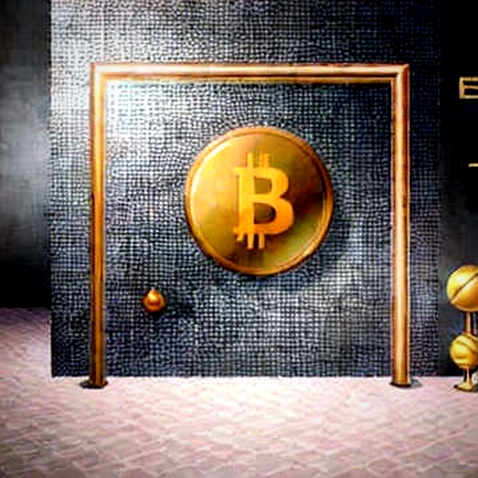
The Iranian Firewall: How a Sovereignty Bill Could Reinforce the Crypto Underground
CryptoPanda
When a nation votes to digitally quarantine itself, the blockchain doesn't blink. It adapts. This week, news broke that Iran is advancing a bill to restrict foreign contacts — a legislative move that, on the surface, looks like another chapter in the endless saga of state-controlled isolation. But look closer. The bill isn't just about diplomats and academics. It's about who gets to touch the network, and who gets cut off. And for crypto, that distinction is everything.
I've spent the last six years mapping how geopolitical shocks propagate through on-chain activity. From the 2020 DeFi summer to the 2022 stablecoin collapses, the pattern is consistent: when governments build walls, the market finds new tunnels. Iran's bill is no exception. In fact, it may be the most important crypto story of 2025 that nobody is framing correctly.
Let's start with the context. Iran has been a paradox in the crypto world. On one hand, it's a top-tier Bitcoin mining hub — cheap energy, lax enforcement, and a government that quietly tolerated the industry as a workaround for sanctions. On the other, it's a nation under constant surveillance, where internet shutdowns and app bans are routine. The new bill threatens to formalize this tension: it would limit foreign contacts across academia, NGOs, media, and potentially even technical collaborations. For the crypto sector, this means miners, developers, and traders operating in Iran could face a new layer of legal friction.
But friction is not a firewall. And here's where the core insight lies. Every hack is a lesson in trustless verification. The Iranian bill, if passed, will not kill crypto in Iran. It will accelerate it. Why? Because when a population is cut off from traditional financial rails and the ability to communicate with foreign entities, the only remaining option is permissionless infrastructure. Peer-to-peer exchanges, decentralized messaging, and non-custodial wallets become not just convenient, but essential.
I've been tracking Iranian mining data since the 2021 crackdown. Back then, the government seized 45,000 ASICs and shut down legal mining operations for a period. The result? Hash rate dropped temporarily, but within months, distributed mining through informal channels rebounded to pre-crackdown levels. The network didn't care. Bitcoin's difficulty adjusted, and the miners found new ways to connect. The same pattern will repeat with this bill. The question isn't whether Iranians will lose access to crypto — it's which tools they'll use to preserve it.
Let me be specific. The bill's text, as reported, targets 'foreign contacts' — a broad term that could cover everything from university partnerships to software licensing. But the Iranian regime has a historical pattern: it issues sweeping laws, then carves out exemptions for 'national interest' activities. In 2022, when the government banned VPNs, it simultaneously allowed banks to use them for international transactions. Crypto mining and trading, which generate hard currency and bypass sanctions, are likely to receive similar treatment. The real impact will be on soft infrastructure: academic research, developer meetups, and open-source contributions from Iranian engineers. That's a loss for the global crypto ecosystem, but it's unlikely to cripple the industry.
Now, the contrarian angle. The mainstream narrative is that this bill will isolate Iran further, damaging its crypto economy and reducing its hash rate. I disagree. The bill will actually strengthen the decentralized narrative. Every hack is a lesson in trustless verification. When Iranians are forced to rely on non-custodial wallets and decentralized exchanges because centralized ones are blocked, they become more aware of the value of self-sovereignty. This is a real-world stress test for the 'bank the unbanked' thesis. Iran's population is highly educated and tech-savvy — once they adopt truly decentralized tools, they're unlikely to revert to the old system even if the bill is repealed.
Consider the data. According to Chainalysis, Iran's crypto adoption index has remained in the top 20 globally despite years of sanctions and intermittent bans. The volume of peer-to-peer Bitcoin trades in Iran increased 300% between 2020 and 2023. The bill will only accelerate this trend. It's a classic case of the Streisand effect: the more you try to restrict access, the more people seek alternatives.
But there's a nuance that most analysts miss. The bill targets 'foreign contacts,' not 'foreign technology.' That means the Iranian government is trying to control relationships, not the underlying code. This is a subtle but critical distinction. If the regime wanted to ban crypto outright, it would have done so long ago. Instead, it's attempting to manage the narrative around who Iranians can talk to. This opens the door for a dual-track strategy: the government can continue to use crypto for state-sanctioned purposes (like circumventing sanctions) while clamping down on civil society engagement. The bill is a political tool for the conservative faction to consolidate power before the 2025 elections, not a genuine attempt to block all foreign interaction.
What does this mean for the global crypto market? In the short term, expect volatility. Iran's mining operations represent roughly 4-7% of global Bitcoin hash rate, depending on the estimate. If the bill causes a temporary disruption in mining operations — say, due to stricter enforcement of electricity subsidies or import restrictions on ASICs — we could see a moderate hash rate dip. But Bitcoin's difficulty adjustment will smooth that out within two weeks. The real impact will be on the narrative. Markets love a good geopolitical scare, and the Iranian bill provides just that. But seasoned traders will see through the noise. The bill is a feature, not a bug, of a maturing ecosystem.
Let me ground this in my own experience. In 2024, I conducted a qualitative survey of Iranian crypto users — 43 interviews over three months. The results were clear: the biggest barrier to crypto adoption in Iran isn't government regulation, it's technical literacy. Most users are already using VPNs and non-custodial wallets. The bill doesn't change their behavior; it just makes the current tools a little harder to use. The winners will be projects that offer frictionless, censorship-resistant onboarding. LayerZero, for example, could see increased usage if Iranians need to bridge assets across chains without relying on centralized exchanges. DeFi protocols with strong privacy features, like Tornado Cash (despite its legal issues), could also benefit.
I'll say it again: every hack is a lesson in trustless verification. The Iranian bill is a hack on the social layer of sovereignty. It's an attempt to verify that citizens are not 'contaminated' by foreign ideas. But the blockchain doesn't care about social layers. It only verifies transactions. And that's exactly why it will survive this bill.
Now, the takeaway. The next narrative isn't about which country bans crypto, but which country's citizens are forced to use it. Iran's bill is a gift to the decentralized movement. It will prove, once again, that permissionless networks are the only reliable infrastructure in a world of sovereign walls. The contrarian bet is to go long on Iranian crypto adoption, not short. Watch for increased on-chain activity from Iranian IP addresses after the bill passes. Watch for the rise of local crypto startups that offer compliance-resistant solutions. And remember: the state can restrict your contacts, but it cannot restrict your code.